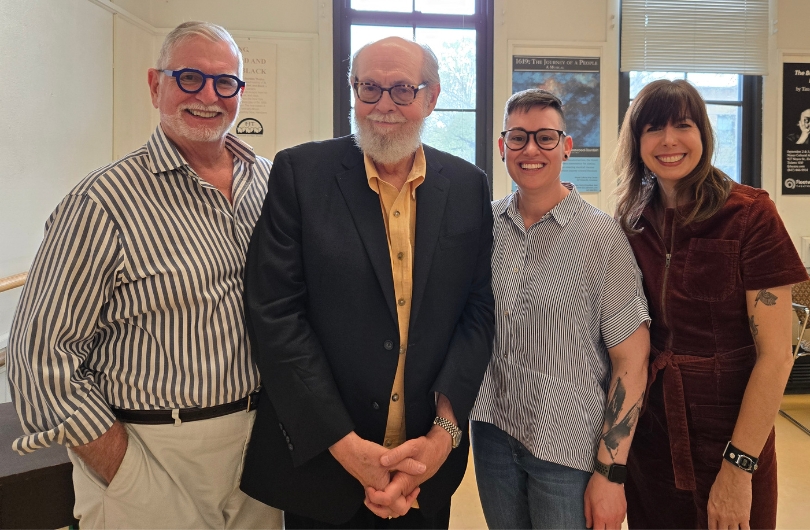
Artistic Director BJ Jones sat down with Laura Schellhardt, a nationally recognized playwright and dramaturg who is currently the head of playwriting at Northwestern University, to chat about the finer points of dramaturgy and preparing students for future careers.
BJ: We’re frequently asked what a dramaturg does in the process of developing new work. Can you talk about that?
Laura: I think new work dramaturgy is incredibly exciting and somewhat addictive, in large part because no project is ever the same. If the play begins as an idea – pitched by a writer to the artistic director or vice versa – then the job might entail helping the playwright craft the first draft via research and conversations about structure, story, and style. If the script arrives as an early draft, then the job might involve prioritizing revision goals, clarifying character arcs, or weeding out repetition, inconsistencies, or banter. I think of that stage of the process as clearing away the smoke so you can see the fire. Once the script’s approaching previews, the job might entail eliciting audience feedback and/or tracking audience response. And because every creative team has different
BJ: Literary management is often coupled with dramaturgy. What’s the distinction?
Laura: I think literary managers benefit the theatre and, by proxy, its playwrights, while a dramaturg benefits a playwright and, by proxy, the theatre. To lean on a familiar metaphor, a literary manager focuses on the forest while a dramaturg tends to the trees. So a literary manager would help find plays for a theatre’s season, working with the artistic director to select a dynamic combination of stories that both cater to and challenge their audience. Once that season is chosen, dramaturgs help the creative team shape each play. A literary manager forges relationships with agents, playwrights, and other literary managers to share scripts and resources, while a dramaturg facilitates relationships between members of the creative team or between the play and the audience. A literary manager works with the artistic director to commission new works from idea to draft. A dramaturg works with the playwright to shape that commission. Literary managers often make great dramaturgs because they’re intimately acquainted with each project that’s selected, and often have a rapport with the writers.
BJ: You’ve been a successful playwright and an inspirational teacher at Northwestern, connecting me with Selina Fillinger, who wrote Faceless for us and who had POTUS on Broadway. Your eye for talent is impeccable. What do you look for when discovering promising playwrights?
Laura: Honestly, I look for attitude before aptitude. Aptitude certainly helps, but attitude is what gets the job done. Selina Fillinger, for example, has a great eye for compelling and prescient stories, but she’s successful in large part because she’s disciplined, she doesn’t fold under pressure, she appreciates feedback (and she knows which feedback to follow,) and she’s a genuinely nice person who’s fun to work with. I think one of the more corrosive myths about writing is that talent = something you’re born with. And yes, some people have a natural ear for character or an inherent ability to craft action, but those skills can be honed if a writer has the right mindset. Most of a writer’s job is knowing how to talk to themself, how to talk to other people, and how to stay the course. I try to cultivate that mindset in my students and myself, and it’s what draws me to the writers I work with professionally.
BJ: Literary management calls for strong relationships with artists and agents. Talk about that aspect of developing the position, and is that part of what you discuss with your students in crafting a career?
Laura: I think the ability to forge those relationships is a necessity in literary management, and it’s also a perk. Most of a literary manager’s job involves finding dynamic stories or storytellers to grace the stages now or in the future. You need help to do that job well, and that help often comes in the form of agents, other literary managers or playwrights. How one cultivates those relationships often depends on – again – a person’s mindset, and that’s what I discuss with my students. If you think about that aspect of the job as “networking” (or god forbid “schmoozing”), those relationships will feel transactional and flat. If you think about it as creative matchmaking, or discovering what people value via the art they make and/or promote, those relationships evolve organically. The adage I follow and teach is to “make a connection, not an impression.”